Commission Cycle Review 2026: Is Mark Ling’s Affiliate System Worth It?
Commission Cycle is Mark Ling’s 2026 affiliate marketing system built around a simple idea: turn social-media attention into conversations, turn those conversations into affiliate sales, and then reinvest part of the commissions to help the business grow.
That sounds simple on paper.
In practice, there are several moving parts. Social traffic. One-word comments. ManyChat-style automation. AI-assisted content creation. Affiliate offers. Customer value. Reinvestment. And underneath all of that sits Mark Ling’s four-part framework:
Attract → Convert → Ascend → Compound
This Commission Cycle Review 2026 takes a closer look at how the system works, what makes it different from a standard affiliate marketing course, what it costs, where the strengths are, and where potential buyers should be cautious.
The short version?
Commission Cycle looks most relevant for people who genuinely want to build an affiliate business around Instagram, YouTube, conversational marketing, automation, and higher-value offers.
It looks much less suitable for someone hoping to buy software, switch it on, and watch passive commissions appear.
Commission Cycle Review: Quick Summary
Before getting into the details, here is the program at a glance.
| Detail | Commission Cycle |
|---|---|
| Product | Commission Cycle |
| Creator | Mark Ling |
| Business Model | Affiliate marketing |
| Main Traffic Sources | Instagram and YouTube |
| Core Strategy | Social content and one-word replies |
| Framework | Attract → Convert → Ascend → Compound |
| Automation | ManyChat-style automation and AI tools |
| Main Niches | Personal development and internet marketing |
| Price | $2,497 |
| Payment Plan | 6 × $497 |
| Free Training | Profit Engine Live |
| Free Resource | Backwards 4-Step Cycle Report |
| Best For | Affiliates comfortable with social content |
| Biggest Concern | Premium price and implementation required |
Quick Verdict
Commission Cycle is not really about discovering a secret affiliate link or learning one clever trick.
Its stronger idea is the business cycle underneath the tactics.
Generate attention.
Convert some of that attention.
Increase customer value.
Reinvest part of the profit.
Repeat.
That framework is sensible.
Whether it is worth $2,497 depends heavily on whether you intend to implement the social-content and automation side of the system.
What Is Commission Cycle?
Commission Cycle is an affiliate marketing training program and toolset from Mark Ling.
The program teaches people how to promote products created by other businesses and earn commissions when those products sell.
So far, that sounds like conventional affiliate marketing.
The difference is in how the traffic and growth model are structured.
Instead of relying primarily on SEO websites, paid search, or a large existing email list, Commission Cycle currently focuses heavily on Instagram, YouTube, social posts, short-form content, one-word replies, automation, and AI-assisted production.
The idea is to get people to show interest first.
Then the marketer moves those interested people toward a relevant offer.
And after a commission is generated, part of that money can be reinvested into the business.
In simple terms:
Content → Reply → Conversation → Offer → Commission → Reinvestment → More Growth
Here’s what most people don’t know: the most important part of Commission Cycle may not be the one-word comment tactic at all.
The real concept is what happens after the first commission.
Many beginner affiliates treat every sale like a separate event.
They make a sale.
Celebrate.
Then start hunting for another buyer from scratch.
Commission Cycle tries to turn that into a loop.
The first commission becomes fuel for the next round.
That is where the name starts making sense.
How Does Commission Cycle Work?
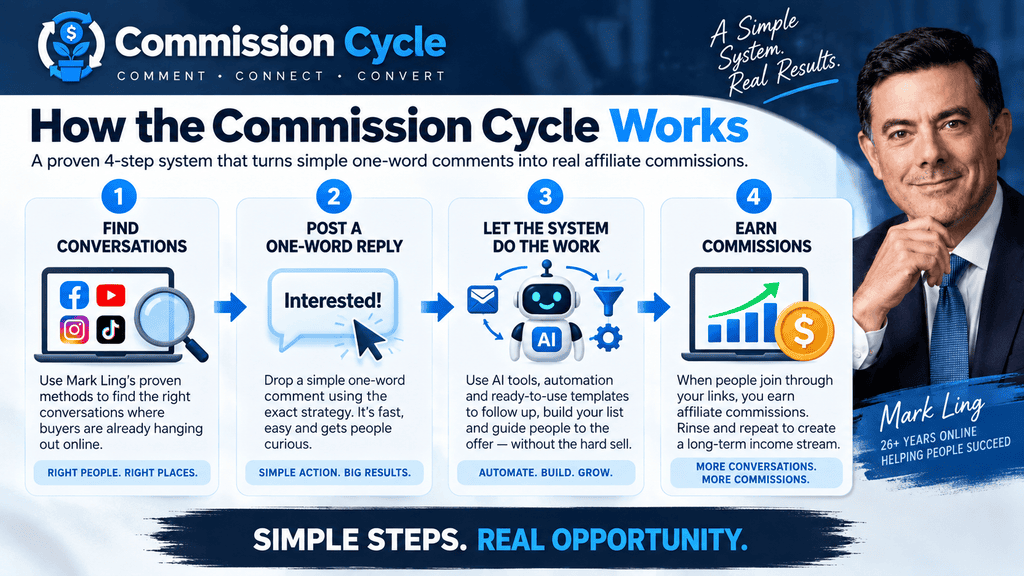
The system is easiest to understand through four stages.
1. Attract
Every affiliate business needs attention.
But attention alone is not enough.
A million views from people who have no interest in buying anything can be less valuable than a small audience with strong intent.
Commission Cycle therefore focuses on generating responses, not just impressions.
A social post may ask someone to comment a simple word such as:
- START
- INFO
- GUIDE
- YES
Why does that matter?
Because a reply is a small form of commitment.
The viewer has moved from passive consumption to active interest.
Think about two posts.
One gets 30,000 views and a handful of random likes.
Another gets 2,000 views and 35 people asking for more information.
If you are running an affiliate business, the second post may be far more commercially useful.
That difference between attention and intent is central to Commission Cycle.
2. Convert
The next stage is converting interest into a meaningful action.
A comment by itself does not earn a commission.
Someone has to move from:
“I’m curious.”
to:
“This product may actually help me.”
Commission Cycle uses conversations, resources, affiliate recommendations, and automation to help bridge that gap.
A simple flow might look like:
Social Post → One-Word Comment → Automated Message → Useful Resource → Relevant Offer
Automation can help with this process.
If 40 people respond to a post, manually replying to every person can quickly become time-consuming.
A system such as ManyChat can help deliver the first response automatically while keeping the broader process organized.
The point is not to blast affiliate links at everyone.
The point is to create a more natural transition between interest and recommendation.
That distinction matters.
3. Ascend
This is where Commission Cycle moves beyond the first affiliate sale.
A beginner often thinks:
“I made a sale. Now I need another stranger.”
An experienced marketer thinks:
“What does this customer logically need next?”
That is the Ascend stage.
A customer who buys a beginner-level product may later need an advanced solution.
A person interested in one niche may have overlapping interests in another.
For example, Commission Cycle places strong emphasis on:
Personal development
and
make-money-online / internet marketing
These two markets can overlap naturally.
Someone interested in improving productivity, confidence, or personal growth may also be interested in starting an online business.
Likewise, someone learning affiliate marketing may also purchase products related to mindset or productivity.
The important word here is relevance.
Ascension should not mean randomly promoting more expensive offers.
It means understanding the customer journey and presenting appropriate next-step solutions.
4. Compound
This is probably the most important stage.
Once a commission is earned, part of it can be reinvested.
That money may go toward:
- acquiring more traffic,
- improving conversion rates,
- producing more content,
- creating better automation,
- building an email list,
- improving customer value,
- or strengthening another part of the business.
Then the cycle starts again.
Attract → Convert → Ascend → Compound → Repeat
That is the Commission Cycle model in its simplest form.
The Four Numbers Behind the Commission Cycle Method
There is another framework underneath the four-stage model.
Mark Ling describes business profit through four major levers:
Leads × Conversions × Average Dollar Value Per Sale × Average Number of Sales Per Customer
This part deserves more attention because it is actually quite practical.
Let me explain.
Imagine you have excellent traffic.
People are clicking.
They are joining your list.
But almost nobody buys.
Would buying more traffic fix that?
Probably not.
You would simply pour more people into a funnel that still converts badly.
Now imagine the opposite.
Your offer converts well, but almost nobody sees it.
In that case, traffic probably is the real bottleneck.
The biggest mistake people make is trying to fix all four problems at the same time.
They buy a traffic product.
Then a copywriting tool.
Then a funnel builder.
Then another AI product.
Then a social-media course.
Soon they are surrounded by tactics and still cannot explain what is actually holding the business back.
Commission Cycle encourages a different question:
Which number needs improvement right now?
That is a much more disciplined way to think.
The One-Word Reply Strategy
One-word comments are one of the most visible parts of the Commission Cycle marketing.
At first, it can sound almost too simple.
A person comments.
You reply.
Somehow there is a commission.
Of course, reality is more nuanced than that.
The one-word comment is simply the starting signal.
The broader idea is that social-media engagement can help identify people who are interested enough to take another step.
Someone who types:
“INFO”
has done more than someone who casually watched a video for five seconds.
The person has given you permission, in a sense, to continue the conversation.
That can lead toward:
- a free resource,
- an automated message,
- a training,
- an email opt-in,
- or a relevant affiliate recommendation.
The tactic is therefore less about the word itself and more about intent-based engagement.
That is what makes it useful.
The Comment Loop
The free Commission Cycle material also introduces what Mark calls the Comment Loop.
The basic idea is that engagement can potentially help content gain more distribution.
A post produces comments.
Those comments signal engagement.
The platform may show the content to more people.
More people see it.
Some of those people respond.
That can create another round of engagement.
It becomes a loop.
Now, no social platform guarantees that every comment will automatically create viral reach.
Algorithms are unpredictable.
But the strategy is understandable.
Rather than creating content that only educates, Commission Cycle encourages content that also invites a specific action.
That can make the content more commercially useful.
AI Tools and Automation Inside Commission Cycle
This is another major part of the program.
Running a social-content business manually can become exhausting very quickly.
Think about what one person may have to do:
Research topics.
Plan content.
Write scripts.
Create social posts.
Produce images.
Make videos.
Publish everything.
Reply to people.
Track results.
Repeat.
That is a lot of work.
Commission Cycle attempts to reduce that workload through AI-powered tools built for the method.
According to the current product material, separate tools can assist with areas such as:
- research,
- script creation,
- social content,
- images,
- videos,
- and related production tasks.
This sounds useful.
But to be honest, this is also where expectations need to remain realistic.
AI can reduce production time.
It cannot replace strategic judgment.
An AI tool can write a script.
It cannot guarantee that the script understands your audience.
It can generate an image.
It cannot guarantee that the image will improve conversions.
Automation can deliver a message.
It cannot guarantee the recipient will buy.
The value is therefore leverage, not magic.
If something that previously took three hours now takes 30 minutes, that can materially change what one person can accomplish.
That is the real benefit.
Does Commission Cycle Require Paid Traffic?
The current system emphasizes organic traffic, particularly through Instagram and YouTube.
That may appeal to beginners because paid advertising can become expensive while someone is still learning.
The broader Commission Cycle philosophy does, however, include reinvestment.
Once the business starts generating commissions, reinvestment may eventually involve paid traffic if that is where the best opportunity exists.
That distinction is important.
The starting strategy may rely heavily on organic social traffic.
The long-term framework is not necessarily anti-paid-traffic.
The principle is to put money into whichever business lever provides the best return.
Do You Need an Email List?
An existing email list is not presented as a requirement to begin.
That makes sense because the traffic strategy starts with social platforms and conversations.
However, Mark still teaches list building.
Why?
Because social followers are rented attention.
An email list is an owned asset.
Instagram can change its algorithm tomorrow.
YouTube can reduce reach.
A social account can even be restricted.
An email list gives the business another way to maintain contact with interested people.
So Commission Cycle does not ignore email.
It simply does not require someone to build a huge list before taking the first steps.
What Niches Does Commission Cycle Focus On?
The two main markets taught are:
Personal Development
Personal development is a broad market with many subcategories.
That gives affiliates more room than a very narrow niche with only a handful of offers.
Internet Marketing / Make Money Online
The second major area is online business.
This may include products related to:
- affiliate marketing,
- marketing software,
- AI tools,
- traffic,
- business education,
- funnels,
- and digital entrepreneurship.
Mark also teaches the idea of moving between the two markets when appropriate.
That overlap can create more monetization opportunities than focusing on one isolated interest forever.
Who Is Mark Ling?
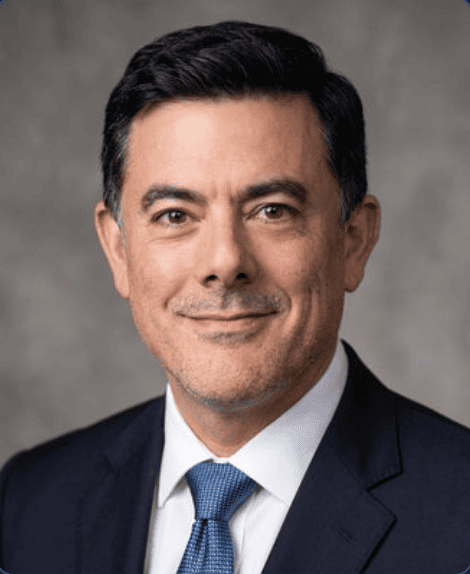
Any serious Mark Ling Commission Cycle review should look at the person behind the program.
Mark Ling has been involved in online marketing since 1999.
That gives him more than 26 years of experience across multiple generations of internet traffic.
According to current Commission Cycle materials, Mark has moved through roughly seven major traffic-source changes during that period.
Different eras included:
- early search engines,
- Google,
- Facebook,
- YouTube,
- Instagram,
- and other traffic channels.
The interesting part is that he says his underlying profit strategy remained relatively consistent.
Traffic changed.
The reinvestment logic did not.
Mark is also associated with long-running affiliate marketing education through businesses such as Affilorama.
Current Commission Cycle promotional material states that people Mark has taught over his wider career have generated more than $400 million in sales through ClickBank.
That claim needs context.
It refers to aggregate historical student activity across past programs and years.
It does not mean Commission Cycle has already generated $400 million.
It also does not suggest that a new customer should expect similar results.
Commission Cycle Pricing
The current Commission Cycle price is $2,497.
There is also an installment option.
| Payment Option | Price |
|---|---|
| Pay in Full | $2,497 |
| Payment Plan | 6 × $497 |
| Payment Plan Total | $2,982 |
| Extra Cost vs Pay in Full | $485 |
This is not an inexpensive course.
That is why price should be part of any honest Commission Cycle review.
The payment plan lowers the initial expense, but it costs more overall.
If you can comfortably afford the full payment, it is cheaper.
If paying $2,497 upfront would put pressure on your finances, spreading the cost may be easier—but that does not mean buying the program is automatically the right decision.
A business course should not create financial desperation.
Commission Cycle Pros
There are several things I like about the structure.
No Need to Create Your Own Product
Affiliate marketers can promote products created and supported by other companies.
That removes product development, fulfillment, and customer-support responsibilities from the starting equation.
Strong Focus on Intent
The one-word reply approach is more commercially focused than simply chasing likes and followers.
Clear Growth Framework
Attract → Convert → Ascend → Compound is easy to understand.
Automation Can Save Time
AI and messaging automation can reduce repetitive work for a one-person business.
No Existing Large Audience Required
The training includes strategies positioned toward newer accounts and beginners.
Free Training Is Available First
You can explore Profit Engine Live and the free 2026 report before considering the paid program.
Commission Cycle Cons
No Commission Cycle Review 2026 would be complete without the drawbacks.
The Price Is High
At $2,497, beginners should think carefully before buying.
Social Content Is Central
If you hate Instagram, YouTube, or posting content regularly, this probably is not the ideal model.
Automation Is Not Fully Passive
Tools may save time, but you still need to make decisions and manage the business.
Results Depend on Execution
A good framework does not guarantee good results.
The Program Focuses Heavily on Two Niches
Personal development and internet marketing receive much of the attention.
Someone targeting a completely different market may need to adapt the strategy independently.
Who Is Commission Cycle Best For?
Commission Cycle may make sense for someone who:
- wants to build an affiliate business,
- prefers promoting products instead of creating them,
- is comfortable using social media,
- wants to use Instagram or YouTube for traffic,
- is interested in automation,
- likes AI-assisted content creation,
- wants a framework for reinvesting profits,
- or already makes affiliate sales and wants to scale.
It may also suit beginners who are prepared to learn and implement consistently.
Who Should Probably Skip It?
I would be cautious if you:
- want guaranteed income,
- expect instant passive commissions,
- dislike social media,
- do not want to produce content,
- only want to build SEO websites,
- cannot comfortably afford the price,
- or tend to buy courses without implementing them.
That last point matters more than people admit.
The biggest mistake people make is assuming that buying another business program automatically creates progress.
It does not.
Implementation creates progress.
What Is Profit Engine Live?
Profit Engine Live is a free online training event connected with Commission Cycle.
The sessions cover subjects such as:
- generating one-word replies,
- creating posts designed to generate engagement,
- beginner affiliate marketing,
- and building a one-person digital business using automation.
One of the sessions specifically introduces the Commission Cycle Method.
If you are considering buying the program, this is probably the most sensible place to begin.
You get to see Mark Ling teach before deciding whether you like his approach.
What Is the Free 2026 Report?
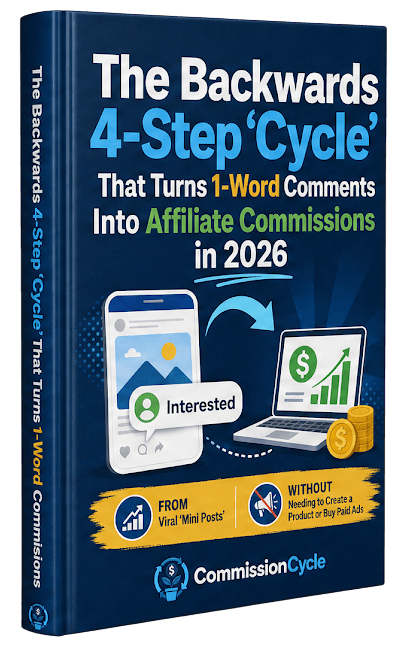
There is also a free report called:
The Backwards 4-Step ‘Cycle’
It covers ideas such as:
- the Comment Loop,
- one-word comments,
- self-feeding traffic,
- hidden buyers,
- automation,
- and the full Attract → Convert → Ascend → Compound process.
For someone researching Commission Cycle, the report provides a lower-commitment way to understand the core strategy.
Is Commission Cycle Legit?
Commission Cycle is a real affiliate marketing training offer associated with Mark Ling and his existing history in online marketing.
But “legit” and “guaranteed profitable” are not the same thing.
The business model itself—affiliate marketing—is legitimate.
The strategies around social traffic, lead generation, automation, and reinvestment are also recognizable marketing concepts.
What cannot be guaranteed is your individual financial outcome.
No course can promise that.
Your results depend on:
- implementation,
- traffic,
- offer choice,
- audience fit,
- conversions,
- consistency,
- market conditions,
- and your ability to improve over time.
That is the realistic way to evaluate it.
Is Commission Cycle Worth It?
This is the most important question.
My view is that the answer depends less on the number of modules inside the course and more on how closely the business model fits the way you want to work.
Commission Cycle may be worth investigating if you want to build around:
Social content + conversations + affiliate offers + automation + reinvestment
It becomes harder to justify if you are buying it because you expect a shortcut to effortless income.
At $2,497, I would not rush.
Start with the free material.
Watch Mark teach.
Understand the traffic method.
Ask yourself whether you can realistically create content consistently.
Look at your financial situation.
Then decide.
That is a much better decision process than buying based on urgency alone.
Final Commission Cycle Review 2026 Verdict
Commission Cycle combines several familiar online-business concepts into one structured system.
Affiliate marketing itself is not new.
Social content is not new.
AI tools are not new.
Automation is not new.
Reinvesting profits is certainly not new.
What Mark Ling has done is connect those pieces into a clear loop:
Attract → Convert → Ascend → Compound
The strongest part of the model, in my opinion, is not the promise of one-word comments.
It is the idea that an affiliate business should stop behaving like a collection of isolated promotions and start operating like a system.
Traffic creates leads.
Leads create sales.
Sales generate commissions.
Commissions fund improvements.
Improvements create more opportunities.
That is a real business principle.
The biggest question is whether you want to build the kind of business Commission Cycle teaches.
If you enjoy social marketing, affiliate offers, automation, and testing, it may deserve a closer look.
If you want a passive push-button income system, this probably is not what you are looking for.
And at $2,497, understanding that distinction before purchasing matters.
Ready to Explore Commission Cycle?
See the strategy directly from Mark Ling before deciding whether the full Commission Cycle system fits your goals.